
In industrial automation, the solenoid valve is the muscle that drives your pneumatic system. However, the solenoid coil is the heart of that valve. When the coil fails, the valve closes (or remains open), bringing production lines to a costly halt.
At Zhejiang KGSY Intelligent Technology Co., Ltd., we understand that reliability is paramount. While our coils are engineered for longevity, understanding why failures happen is the first step toward prevention. This guide explores the most common reasons for coil burnout and how selecting the right KGSY products—such as our 4M, 4V, and KG800 Series—can safeguard your operations.
What Does the Coil Actually Do?
Before diagnosing failure, it is essential to understand the component. The solenoid coil converts electrical energy into magnetic energy. When energized, it creates a magnetic field that lifts a plunger (armature), opening or closing the pilot hole to shift the valve spool.
If this process is interrupted by electrical instability, environmental factors, or mechanical jamming, the coil can overheat and burn out.
1. Incorrect Voltage and Electrical Fluctuations
The most frequent cause of coil failure is supplying the wrong voltage or experiencing severe power fluctuations.
-
Overvoltage: If the voltage supplied is significantly higher than the rated voltage, the current flowing through the coil increases. This generates excessive heat, melting the insulation on the copper wire and causing a short circuit.
-
Undervoltage: If the voltage is too low, the magnetic field may be too weak to pull the plunger completely. In AC coils, this prevents the magnetic circuit from closing, causing a massive “inrush current” to flow continuously, which quickly burns out the coil.
The KGSY Solution: Wide Voltage Tolerance
KGSY solenoid valves are designed to handle real-world industrial power grids. Our coils support a wide scope of voltage fluctuations:
-
AC Voltage Tolerance: ±15%.
-
DC Voltage Tolerance: ±10%.
We offer a comprehensive range of standard voltages to match your power supply, including AC220V, AC110V, AC24V, DC24V, and DC12V . Ensuring you order the correct voltage specification is the first line of defense.
2. Mechanical Jamming ( The “Stuck Plunger” Effect)
For an AC solenoid coil, the plunger must move. If debris or mechanical friction prevents the plunger from pulling all the way into the core, the coil acts like a shorted transformer. It continues to draw maximum inrush current (which can be 5 to 10 times the holding current) until it overheats and destroys itself.
Common Causes of Jamming:
-
Debris: Dirt or metal shavings entering the pilot valve.
-
Lubricant Sludge: Old oil thickens in cold temperatures or carbonizes in heat.
-
Damaged Core: A bent armature tube preventing movement.
The KGSY Solution: Low Friction and Filtration
KGSY valves are engineered to resist jamming.
-
No Lubrication Needed: Our 4M and 4V Series feature internal holes processed with special technology to minimize attrition friction. This allows for a low start pressure and long service life without the need to add oil for lubrication. This eliminates the risk of oil sludge buildup.
+1 -
Filtration Recommendation: To protect the valve core, we advise using clean air filtered by a 40μm filter element. Using a KGSY Air Filter Regulator (like our AW2000 Series) upstream is the best preventive maintenance you can perform.
3. Environmental Ingress (Moisture and Dust)
Industrial environments are harsh. If water, chemicals, or dust penetrate the coil housing, they can cause corrosion between the windings or a direct short circuit to the ground.
-
Humidity: In water treatment or outdoor applications, standard IP ratings may not suffice.
-
Chemical Atmosphere: Corrosive gases can degrade the epoxy encapsulation of the coil.
The KGSY Solution: High IP Ratings and Explosion Proofing
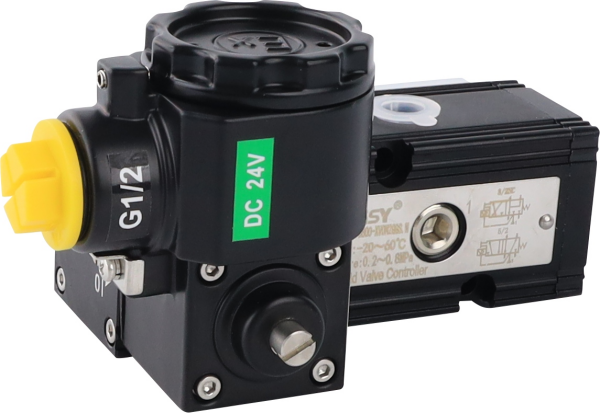
We provide specialized protection for every environment:
-
Standard Protection: Our standard coils, such as those on the 4V Series, are rated IP66, offering excellent protection against high-pressure water jets and dust.
-
Severe Duty: For submerged or extremely wet environments, our KG800-XC Series offers weatherproof enclosures rated up to IP67.
-
Hazardous Areas: For environments with explosive gases (petrochemical, oil & gas), KGSY offers certified explosion-proof coils (e.g., FC800 Series) with ratings like Ex db IIC T6 Gb and Ex mb encapsulation.
4. Overheating and High Ambient Temperatures
Heat is the enemy of coil insulation. Even if the voltage is correct, high ambient temperatures can push the coil beyond its thermal limit. Furthermore, leaving a coil energized 24/7 (100% duty cycle) generates its own heat.
The KGSY Solution: Low Power Consumption
One of the most effective ways to prevent overheating is to generate less heat in the first place. KGSY has optimized our magnetic designs for high efficiency and low power consumption:
-
DC Coils: Consume as little as 2.5W to 3.0W.
-
AC Coils: Low consumption of 4.5VA to 5.0VA.
This low power draw ensures the coil runs cooler, extending its lifespan even in ambient temperatures ranging from -20°C to +70°C. For extreme heat, our B Class temperature classification ensures the insulation remains intact.
Troubleshooting Guide: Is It the Coil?
If your pneumatic valve is not moving, don’t immediately assume the coil is bad. Follow this troubleshooting checklist based on KGSY maintenance protocols:
-
Check Power: Is voltage reaching the connector?
-
Test the Coil:
-
Symptom: The valve does not switch, but power is present.
-
Check: Remove the coil and test resistance with a multimeter. If resistance is infinite (open circuit) or zero (short circuit), the coil is burned.
-
Solution: Solenoid valve replacement or replacement of coils is necessary.
-
Check the Mechanics:
-
Symptom: The coil is hot and magnetized, but the valve won’t switch.
-
Check: The valve core might be blocked by foreign matter.
-
Solution: Remove impurities and replace damaged parts if necessary.
Summary: How to Prevent Failure
To ensure years of trouble-free operation from your KGSY solenoid valves, follow these three rules:
-
Match the Environment: Don’t use a standard IP65 coil in an underwater or explosion-hazard zone. Choose our KG800 or FC800 Series for these applications.
-
Clean the Air: Install a KGSY Air Filter (AW Series) to keep the plunger movement friction-free.
-
Check the Voltage: Ensure your power supply remains within the ±10-15% tolerance window.
Need a Replacement or Technical Advice?
Whether you need a low-power replacement coil or a fully explosion-proof valve assembly, KGSY has the inventory and expertise to help.
-
Explore our Series: 4M, 4V, KG800, FC800
-
Contact Us: manager@zjkgsy.com
-
Phone/WeChat: 086-13587661980
-
Website: www.chinakgsy.com
Post time: Jan-17-2026

