
For engineers, plant managers, and maintenance teams, the reliability of outdoor electrical installations is a constant battle against the elements. Automated valve systems—critical components in petroleum, chemical processing, power generation, and wastewater treatment—are especially vulnerable. While the valves and actuators are built for heavy-duty service, their intelligent control accessories, housed within outdoor switch boxes or limit switch boxes, contain sensitive electronics that demand a pristine environment.
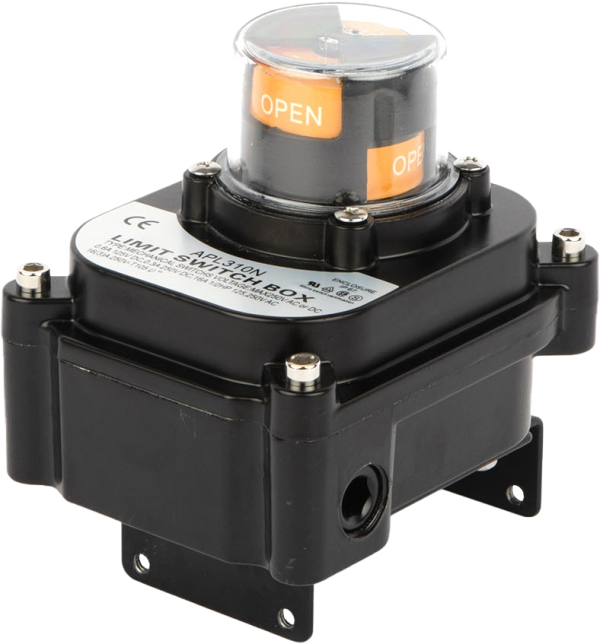
Zhejiang KGSY Intelligent Technology Co. Ltd., a high-tech manufacturer specializing in these critical accessories (limit switch boxes, solenoid valves, and positioners), engineers products with robust standard protection, such as IP67-rated enclosures. However, even a high-quality enclosure is only the first line of defense. Long-term outdoor longevity requires a comprehensive strategy to manage the dual threats of external water ingress and internal condensation.
A failed limit switch box means false position feedback, interlock failures, and unexpected plant shutdowns. This article provides a comprehensive guide on engineering a complete outdoor sealing and environmental control strategy.
Section 1: The Dual Threat – Ingress versus Condensation
The first step in prevention is understanding that “moisture” comes from two distinct sources, requiring different engineering solutions.
Water Ingress (External Source)
Water ingress is the active, entry of liquid water into the switch box from the surrounding environment. This includes rain, sleet, snow, windblown dust, high-pressure washdown procedures, or even temporary submersion. Ingress typically occurs through structural weak points: the main cover gasket, conduit entries, and the dynamic rotary shaft seal.
Condensation (Internal Source)
Condensation is the insidious formation of liquid water inside an enclosure that may be perfectly sealed against external ingress. It is caused by the physical properties of air. A sealed enclosure traps a volume of air, which naturally contains moisture (humidity). When the internal temperature of the switch box falls rapidly (such as at night), the air cools, reducing its ability to hold moisture. When the temperature reaches the “dew point,” the moisture condenses into liquid water on the coldest internal surfaces—often the electronic terminals, switches, and the enclosure body.
Both threats lead to the same catastrophic results: corrosion of terminals, mold growth, short circuits, and eventual system failure.
Section 2: Phase 1 – Fighting Water Ingress: Sealing the Perimeter
Fighting water ingress requires a rigorous approach to enclosure specification, installation methodology, and gasket maintenance.
1. Specifying the Right Enclosure Rating
For outdoor valve monitoring, the standard recommendation is an enclosure rated to at least IP66 or IP67, or NEMA 4X.
- KGSY’s IP67 Solution: Zhejiang KGSY engineers its core series of limit switch boxes to meet IP67 specifications. This means they are completely dust-tight (IP6X) and protected against the effects of temporary immersion in water (IPX7).
- NEMA 4X (North America): While IP67 focuses strictly on dust and temporary immersion, NEMA 4X, preferred in North American industrial projects, adds tests for corrosion resistance and ice formation. For harsh chemical environments or coastal installations, NEMA 4X (typically 316 stainless steel or a reinforced non-metallic material) provides enhanced durability.
2. Sealing Conduit and Cable Entries
This is the single most common weak point in any outdoor installation. A standard conduit connector offers zero environmental protection. If the entry is not sealed, the conduit acts as a pipeline, funneling rainwater directly into the switch box.
Best Practices for Sealing Entries:
- Weatherproof Fittings: Always utilize industrial-grade, watertight, or “liquid-tight” conduit connectors or cable glands designed specifically for outdoor service.
- Drip Loops: When utilizing flexible conduit, always install a “drip loop”—a U-shaped bend in the conduit immediately before the entry to the switch box. Gravity causes rainwater to pool at the bottom of the loop and drip off, preventing it from running down the cable and into the connector.
- Thread Sealants: Apply a high-quality thread sealant or a sealing gasket to the threads of the conduit where it connects to the switch box entry hub.
- Sealants and Putty: For complex cable bundles, non-hardening putties like Duct Seal can be packed around the wires inside the entry hub. Closed-cell expanding foam or mechanical modular seals offer a more permanent solution for large conduit systems.
3. Maintaining Gasket Integrity
The main cover gasket is critical. Enclosures utilizing robotically applied foam-in-place gaskets provide a superior, continuous seal, eliminating seams where water can penetrate. The choice of elastomer is crucial for outdoor service:
- EPDM (Ethylene Propylene Diene Monomer): Excellent choice for outdoor weathering, UV, and ozone resistance. Flexible at low temperatures. Avoid in petroleum or oil environments.
- Neoprene: Good resistance to water, oils, and ozone, offering robust, mid-range temperature performance (-80°F to 300°F).
- Silicone: Expensive but required for extreme temperature ranges (-180°F to 525°F) and extreme UV/ozone resistance.
Maintain a regular maintenance schedule to inspect gaskets for signs of drying, cracking, or dry rot caused by UV/ozone exposure.
Section 3: Phase 2 – Managing Condensation: Managing the Internal Environment
A “sealed” IP67 box will still condense if the internal environment is not actively managed. The core goal is to keep the internal air temperature above the dew point and reduce the total volume of trapped moisture.
1. Strategic Positioning
Reduce the total thermal shock.
- Avoid Direct Sunlight: Locate the outdoor switch box cabinet away from direct sunlight, which can cause intense rapid temperature fluctuations.
- Plastic or Insulated Enclosures: Plastic enclosures provide better inherent thermal insulation than metal. They adapt slower to rapid air temperature changes, leading to less dramatic internal temperature drops and less condensation.
2. Ventilation: Passive and Active
Ventilation is vital but creates a potential path for external ingress. It must be implemented carefully.
- Passive Ventilation: Panel vents or crossed ventilation rely on natural temperature differentials to circulate air. Cold air enters from the bottom, and warm air expels from the top. Slanted louvre vents can minimize direct rain ingress while allowing passive flow.
- Active Ventilation: Forced-air ventilation using blower fans is mandatory for switch boxes containing significant heat-generating equipment. Forced circulation regulates internal temperature and actively draws stale, humid air out.
3. The Breather Drain: The Sealed Enclosure’s Critical Friend
Tightly sealing an outdoor enclosure can paradoxically stress the seals. Rapid temperature changes create pressure differentials, effectively “inhaling” moisture through microscopic weak points.
A breather drain is a critical, yet often overlooked, venting component. It allows controlled air movement (pressure equalization) while actively blocking the entry of dust, water, and contaminants (often maintaining the enclosure’s IP rating). They respond to temperature-driven pressure changes, relieving strain on gaskets and preventing moisture accumulation. Desiccant breathers can also actively dry incoming air before it enters the enclosure. KGSY strongly recommends the use of breather drains on all outdoor switch box installations in climates with rapid temperature variations.
4. Active Heating Solutions
Heating warmed the internal temperature, keeping it above the dew point. This is a reliable, though more expensive, solution. To be efficient, heaters must be used with control devices:
- Thermostats: Trigger heaters only when internal temperatures fall below a critical set point.
- Hygrostats (Humidity Control): Activated based on a rising internal humidity threshold (e.g., above 60%).
- Hygrotherms: Combine temperature and humidity control to activate heaters only when condensation risk is highest.
Conclusion: A Total System Approach
Preventing water and condensation failure in outdoor switch boxes is not achieved with a single product; it is achieved with a total system methodology.
Zhejiang KGSY Intelligent Technology Co. Ltd. provides a reliable foundation with our IP67-certified limit switch boxes, designed with splined shaft cams and PCB-mounted terminals to withstand vibration. Our motto is “Technology is foundation, Quality is credibility, Service is guarantee.” By applying this rigorous standard to the installation methodology—using watertight conduit entries, proper gaskets, breather drains, and environmental control (heaters/hygrostats)—plant managers can ensure their outdoor valve monitors provide reliable, continuous service, year after year, regardless of the weather.
Post time: Apr-08-2026

