
In today’s highly globalized industrial supply chain, procurement teams and plant engineers regularly source automated valve accessories—such as limit switch boxes, positioners, and solenoid valves—from international manufacturers. Sourcing globally can significantly reduce capital expenditure (CapEx) and lead times. However, it also introduces a critical risk: specification inflation.
One of the most commonly exaggerated specifications on imported valve accessories is the IP (Ingress Protection) rating. Water and moisture ingress is the number one cause of electronic failure in valve position monitors. When a limit switch box floods, the mechanical switches short out, the Distributed Control System (DCS) goes blind, and the facility faces unplanned downtime or catastrophic process failures.
If you are importing equipment like limit switch boxes, how do you know if that “IP67″ sticker is legitimate? This comprehensive SEO guide will walk you through the steps to verify IP ratings on imported valve accessories, ensuring your plant remains safe, dry, and operational.
1. The Real Cost of “Fake” IP Ratings
Before diving into verification methods, it is vital to understand what happens when a falsely rated enclosure fails.
Imagine a wastewater treatment plant or an offshore oil rig relying on a network of automated valves. A procurement manager buys a batch of imported limit switch boxes marketed as “IP67 Weatherproof.” Six months later, during the rainy season or a standard chemical washdown, moisture bypasses the cheap rubber seals. The copper terminals corrode, and the inductive sensors short-circuit.
The DCS receives a false “Valve Closed” signal, triggering a high-pressure pump to engage against a dead-head, destroying the pump seals. The cost of this single failure—including pump replacement, labor, and plant downtime—can easily exceed $50,000. In industrial automation, a cheap, falsely rated box is the most expensive piece of equipment you can buy.
2. Decoding the Numbers: What Do IP67 and IP68 Actually Mean?
To verify a rating, you must first understand the IEC 60529 standard, which governs Ingress Protection. The IP code consists of two digits:
-
First Digit (Dust/Solids): A “6″ is the highest rating. It means the enclosure is completely dust-tight. No talc, cement, or grain dust can penetrate the housing.
-
Second Digit (Liquids):
-
A “7″ means the box can withstand temporary submersion in water up to 1 meter deep for 30 minutes.
-
An “8″ means the box is built for continuous submersion under specific conditions (usually defined by the manufacturer, such as 3 meters for 72 hours).
-
If an imported box claims to be IP67 or IP68, it must be engineered to survive these exact conditions without a single drop of water touching the internal terminal blocks.
3. Step 1: Demand Third-Party Laboratory Reports
The most common trap in importing is the “Self-Declaration” loophole. In many overseas markets, a manufacturer can print “IP67″ on their product label and self-certify it without ever putting the box in a test tank.
To verify the rating before issuing a purchase order, you must ask the manufacturer for a Third-Party Test Report.
-
What to ask for: “Please provide the IEC 60529 test certificate from an accredited independent laboratory.”
-
What to look for: Look for recognized international testing bodies such as TÜV, SGS, CSA, DNV, or UL.
-
The Ex d overlap: If the box is also rated Explosion-Proof (like the heavy-duty ALS-500 series), its ATEX or IECEx certificates will often include the IP testing verification, as flameproof enclosures must also be heavily sealed against the environment.
If the supplier cannot produce a verifiable third-party lab report, treat their IP rating as a marketing claim, not an engineering fact.
4. Step 2: The Physical Teardown and Visual Inspection
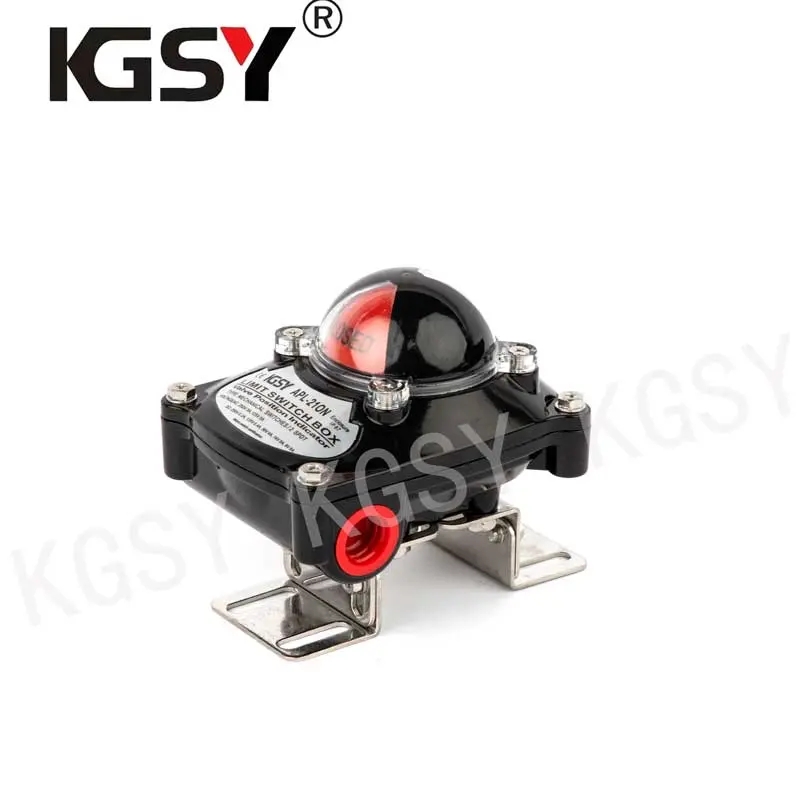
Once you receive a sample unit, do not just install it. Hand it to your instrumentation team for a physical teardown. High-quality manufacturers, such as Zhejiang KGSY Intelligent Technology Co., Ltd., design their APL and ALS series boxes with visible, engineered sealing architectures.
Here is what your engineers should look for to verify the IP claim:
A. The Cover O-Ring (The Primary Seal)
Unscrew the cover. Look at the groove where the top and bottom halves of the enclosure meet.
-
Fake IP67: Uses a thin, flat rubber gasket or a cheap NBR (Nitrile) string that falls out of the groove.
-
True IP67/IP68: Uses a thick, custom-molded, continuous Viton or Silicone O-ring that sits perfectly within a precision-machined CNC groove. It should compress evenly when the cover bolts are tightened.
B. The Drive Shaft Seals (The Weakest Link)
The shaft connects the internal sensors to the external valve actuator. Every time the valve turns, the shaft rotates, causing friction against the seal.
-
Fake IP67: Uses a single, standard rubber washer. After 10,000 cycles, the washer wears down, and rainwater wicks straight down the shaft into the box.
-
True IP67/IP68: Utilizes a dual-lip seal architecture (inner and outer O-rings). This redundancy ensures that even if the outer seal degrades from UV exposure or salt spray, the inner seal maintains the watertight barrier.
C. Fasteners and Captive Bolts
Look at the bolts holding the cover on. Are they standard carbon steel? If so, they will rust, expand, and crack the housing, destroying the IP rating. Genuine IP67/IP68 boxes use 304 or 316 stainless steel captive bolts that will not drop out during maintenance and will never rust in the field.
5. Step 3: Scrutinize the Cable Entries
A limit switch box can be a perfectly sealed submarine, but if the cable entries are flawed, the unit will flood.
Imported boxes often come with generic plastic plugs in the cable entries. Plant managers must understand that the IP rating of the switch box is only valid if paired with a cable gland of an equal or higher IP rating.
-
Check the thread machining. Are the NPT or Metric threads cleanly cut? Rough, burred threads will prevent a cable gland from seating properly, creating a direct path for moisture.
-
Ensure that when you wire the box, you use certified IP67 or IP68 cable glands, and loop the incoming cable downward (creating a “drip loop”) so gravity pulls water away from the entry point.
6. Step 4: Conduct Your Own Factory Acceptance Test (FAT)
If you are buying hundreds of limit switch boxes for a massive plant upgrade, it pays to perform your own bench test on a random sample.
-
The Submersion Test: Remove the electronics from the sample box, or place a piece of moisture-indicating paper inside.
-
Seal the box according to the manufacturer’s torque specifications. Plug the cable entries with threaded steel plugs and Teflon tape.
-
Submerge the box in a deep bucket of water or a test tank for 30 minutes.
-
Remove, dry the exterior completely, and open the cover. If there is a single drop of water inside, the IP67 claim is false.
Conclusion: Partner with Proven Engineering
Verifying the IP ratings on imported valve accessories is not just an exercise in quality control; it is a fundamental requirement for plant safety and process reliability. By demanding third-party IEC 60529 certificates, performing physical teardowns to inspect O-rings and shaft seals, and scrutinizing cable entries, procurement teams can protect their facilities from the devastating costs of water ingress.
When specifying valve position monitors, partner with manufacturers who build ingress protection into their core DNA. Products like the APL-210 compact series and the ALS-500 heavy-duty explosion-proof series from KGSY are engineered with precision-machined grooves, dual-shaft seals, and marine-grade coatings. By choosing verified, tested hardware, you ensure that your automated valves remain communicative, reliable, and entirely immune to the elements.
Post time: Jun-24-2026

