
In the food, beverage, and dairy processing industries, consumer safety is the ultimate metric of operational success. A single batch contaminated by bacteria, mold, or foreign particulate can lead to devastating product recalls, brand damage, and strict regulatory penalties. To prevent these risks, modern food and beverage (F&B) plants are designed with highly automated process lines where raw ingredients are continuously routed, mixed, cooked, and packaged.
At the heart of these automated networks are sanitary valves—such as diaphragm, butterfly, and seat valves—which dictate the flow of delicate process media. However, these valves cannot operate blindly. The Distributed Control System (DCS) or Programmable Logic Controller (PLC) requires absolute, real-time feedback to confirm whether a valve is fully open, fully closed, or throttling at an exact percentage.
This feedback relies on valve position monitors and limit switch boxes. Yet, standard industrial switch boxes cannot survive the aggressive sanitation cycles or strict hygiene requirements of F&B lines. To secure both process automation and consumer safety, engineers must specify specialized hygienic valve feedback systems.
This comprehensive technical guide explores the severe sanitization challenges of food-grade pipelines, the critical material sciences required for sanitary enclosures, and how Zhejiang KGSY Intelligent Technology Co., Ltd. engineers its position transmitters to meet global hygienic standards.
1. The Sanitary Gauntlet: Why Food & Beverage Lines Are Hostile to Electronics
In standard heavy industries, the primary threat to electrical accessories is external dust, rain, or physical impact. In F&B processing, the threat is much more aggressive: it is the factory’s own daily sanitization regime.
To maintain strict sanitary standards, facilities undergo rigorous Clean-in-Place (CIP) and Steam-in-Place (SIP) procedures multiple times a day:
Clean-in-Place (CIP)
This chemical washdown involves circulating aggressive cleaning agents—such as hot sodium hydroxide (caustic soda) at temperatures up to 85°C and highly acidic nitric or phosphoric acid solutions—directly through the process pipes. Additionally, the external surfaces of the valves, actuators, and limit switch boxes are subjected to high-pressure hot water washdowns, often utilizing chemical sanitizers blasted at pressures exceeding 1,000 PSI (frequently requiring IP69K rated sealing).
Steam-in-Place (SIP)
To achieve absolute sterilization, saturated steam is injected directly through the lines at temperatures reaching 130°C to 140°C. This intense heat conducts directly up the valve stem and into the limit switch box, creating severe thermal shock.
Standard general-purpose limit switch boxes will fail rapidly under this relentless thermal and chemical onslaught. The plastic housings warp, standard rubber gaskets degrade, and water eventually breaches the electrical cavity, causing terminal corrosion and false feedback signals that halt production.
2. Material Excellence: Eliminating Crevices and Biofilms
In a food-grade environment, the exterior of an instrument is just as critical as the interior. To prevent the growth of harmful bacteria and pathogens (such as Listeria or Salmonella), all equipment must adhere to “hygienic design” principles.
Avoiding Crevices and Dead Spaces
Bacteria require moisture and nutrients to multiply. Standard industrial limit switch boxes often feature deep cooling fins, external bolted joints, and sharp, recessed corners. In an F&B facility, these crevices act as “dirt traps” where organic residue accumulates. During high-pressure washdowns, these areas are shielded from the spray, creating the perfect breeding ground for biological biofilms.
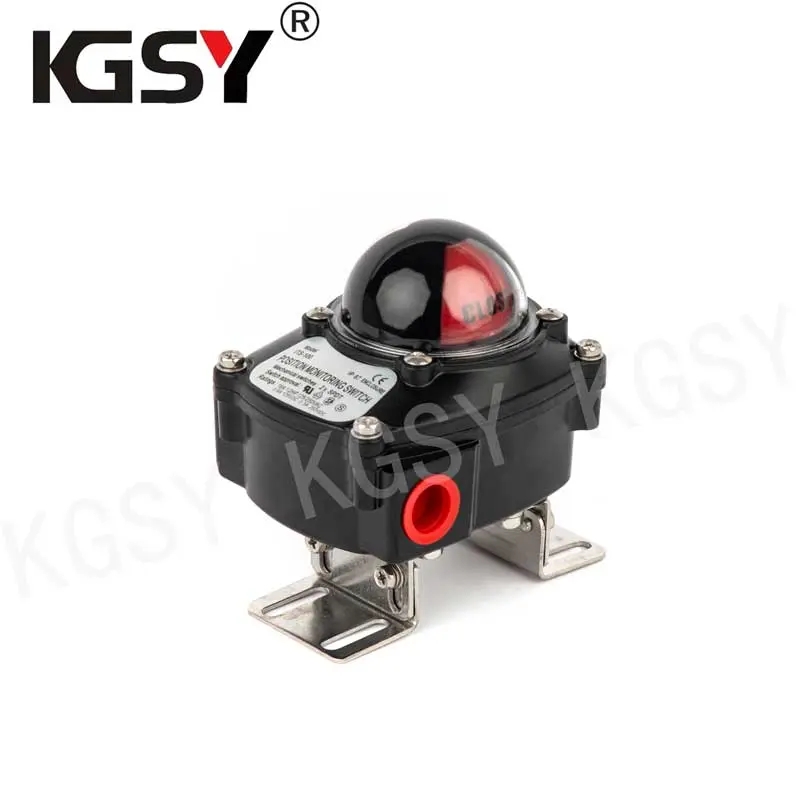
- ● KGSY Solution: Hygienic valve monitors, such as the compact DSK series, are designed with smooth, rounded contours. The exterior is entirely self-draining, ensuring that water and cleaning fluids slide off immediately rather than pooling on top of the enclosure.
316L Stainless Steel Housing
For highly corrosive areas—such as dairy processing, brewery yeast handling, or acidic citrus juice packaging—metallurgical immunity is required. Zhejiang KGSY offers premium enclosures fabricated entirely from 316L Stainless Steel. The low-carbon chemistry of 316L offers superior resistance to pitting and chemical corrosion caused by chlorine-based sanitizers and aggressive organic food acids.
Premium Fluoropolymer Gaskets
To maintain the hermetic seal of the enclosure during CIP/SIP thermal shock, standard Nitrile (NBR) gaskets are insufficient. Hygienic switch boxes utilize Viton (FKM) or FDA-compliant Silicone O-rings. These advanced elastomers retain their elasticity and sealing force across extreme temperature ranges, ensuring the IP67/IP68 ingress protection is never compromised.
3. The ITS-100 Linear Valve Sensor: Perfecting Diaphragm Valve Feedback
Because diaphragm valves are highly self-draining and sanitary, they are the preferred valve type for F&B batch processing. However, they operate on a linear stroke, moving only a few millimeters from open to close.
Traditionally, monitoring these valves required mounting a bulky, general-purpose rotary limit switch box using a complex “linear-to-rotary” mechanical conversion kit.
The Problem with Traditional Stacked Linkages:
- ● Contamination Risk: The exposed levers, pins, and springs of the conversion kit act as a massive dirt trap that cannot be properly cleaned during CIP washdowns.
- ● Mechanical Play: The conversion of linear motion to rotary motion introduces hysteresis, leading to drift in the position signal.
The ITS-100 Game-Changer:
The ITS-100 Integrated Linear Valve Sensor eliminates this mechanical complexity entirely. By combining direct linear sensing and electropneumatic control into a single, low-profile enclosure, the ITS-100 mounts directly to the diaphragm valve stem.
- ● Crevice-Free Coupling: The physical interface is completely enclosed, eliminating any external moving linkages that could harbor bacteria.
- ● Continuous Feedback (4-20mA): For precise ingredient batching and continuous blending, the ITS-100 can transmit a continuous analog 4-20mA position signal back to the DCS, ensuring the valve is throttled with micron-level accuracy.
4. Upgrading to Non-Contact Proximity Sensing
Within the limit switch box, the method of electrical switching plays a massive role in long-term reliability. Traditional mechanical micro-switches contain moving copper springs and open silver contacts.
In the humid, warm, and chemically saturated atmosphere of an F&B plant, any trace of moisture that bypasses the enclosure seals will cause the silver contacts to oxidize, leading to signal drift or complete feedback failure.
To solve this, modern sanitary plants are standardizing on NAMUR Inductive Proximity Sensors (such as Pepperl+Fuchs sensors integrated within KGSY enclosures):
- ● Zero Moving Parts: Inductive sensors operate on solid-state electromagnetics. There is no physical contact to wear out, bend, or fatigue over millions of valve cycles.
- ● Hermetic Sealing: The sensor elements are completely encased in solid epoxy resin inside the switch box. Even if the main enclosure cover is opened during maintenance in a humid washdown bay, the sensor itself remains completely impervious to moisture and chemical decay.
5. Practical Installation Guidelines for Sanitary Skids
Even the most advanced hygienic position monitor can fail if improperly installed. Ensure your mechanical and electrical teams follow these sanitary wiring protocols:
1. Utilize Drip Loops: Always bend the incoming electrical cable into a U-shape (“drip loop”) immediately before it enters the switch box cable gland. This ensures that gravity forces washdown water to pool and drip off at the bottom of the loop, rather than running down the cable and forcing its way past the cable gland seal.
2. Specify Non-Metallic or SS316 Glands: Never use standard nickel-plated brass glands, which will tarnish and degrade under caustic CIP washes. Specify high-grade nylon or 316 stainless steel cable glands.
3. Ensure Tight Cover Torque: When reassembling a switch box after calibration, tighten the captive cover bolts in a diagonal cross-pattern to guarantee even compression of the Viton or Silicone O-ring seal.
Conclusion
Hygienic valve feedback is the quiet guardian of process purity and product quality on the food and beverage factory floor. By moving away from general-purpose, crease-heavy hardware in favor of highly engineered, self-draining, and chemically resistant enclosures, plants can permanently eliminate the risk of water ingress, signal failure, and bacterial accumulation.
At Zhejiang KGSY Intelligent Technology Co., Ltd., we believe that “Quality is Credibility.” Our DSK and ITS-100 series position monitors are engineered specifically to handle the sanitary gauntlet of modern F&B pipelines. By prioritizing 316L stainless steel metallurgy, FDA-compliant elastomers, and direct linear sensing technology, KGSY helps you protect your brand, secure your process, and deliver uncontaminated quality to consumers worldwide.
Post time: May-27-2026

