
In the global valve automation supply chain, sourcing custom accessories is a highly effective way for valve and actuator manufacturers to build single-source authority, expand profit margins, and maintain brand consistency. Customizations—such as matching an enclosure to a specific corporate RAL color, laser-etching custom stainless steel nameplates, or installing specialized gold-plated or NAMUR proximity sensors—elevate a generic assembly into a premium, proprietary product line.
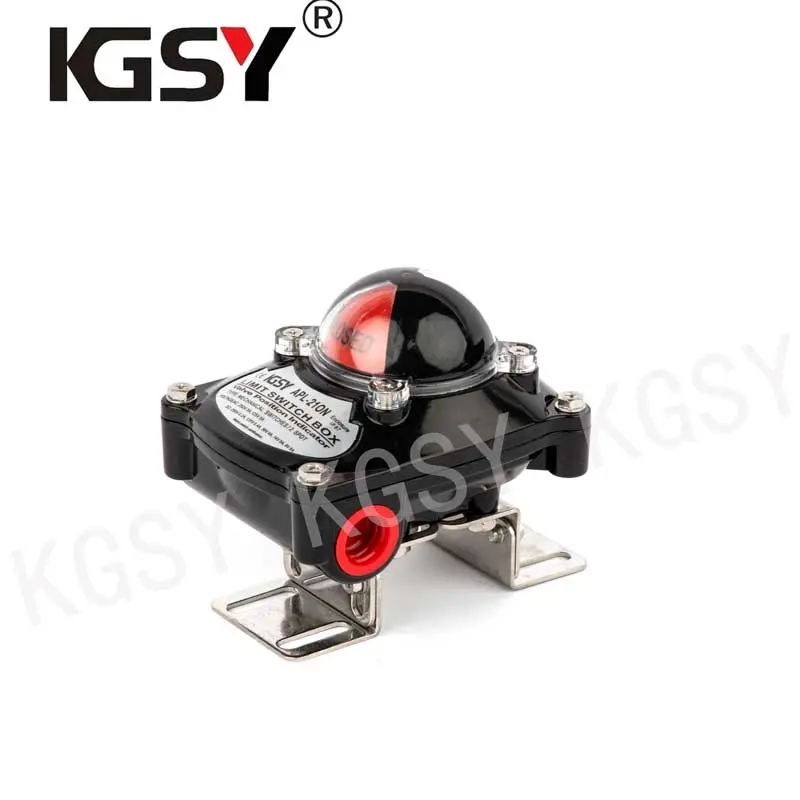
However, during the initial procurement phase, many supply chain managers and project engineers run into a critical operational variable: Minimum Order Quantity (MOQ).
MOQs are often viewed as a barrier to entry, particularly for mid-sized valve distributors or niche engineering, procurement, and construction (EPC) projects. But in modern industrial manufacturing, MOQs are not arbitrary numbers. They are governed by the strict physics of manufacturing setups, material supply chains, and economic efficiency.
This comprehensive sourcing guide explores the operational realities behind custom switch box MOQs, details how customization tiers are structured, and outlines strategic techniques procurement managers can use to optimize order volumes when partnering with leading suppliers like Zhejiang KGSY Intelligent Technology Co., Ltd.
1. The Manufacturing Physics of MOQs: Why They Exist
To negotiate effectively, procurement teams must first understand why a manufacturer cannot easily produce a custom run of just five or ten switch boxes. The cost of manufacturing any customized valve accessory is divided into two distinct components: fixed setup costs ( ) and marginal production costs (
 ).
).
The total cost per unit ( ) for an order of size
  can be mathematically represented as:
 As the order quantity () increases, the fixed setup cost is amortized over more units, causing the unit cost to decrease asymptotically toward the marginal cost of production. If is too small, the setup costs dominate, making the run financially unviable for both the manufacturer and the buyer.
Several key setup processes drive the need for MOQs in custom switch box production:
-
Powder Coating Line Color Swaps: Changing the automated spray booth from a standard color (such as black or yellow) to a custom corporate RAL color requires halting the entire line. Technicians must thoroughly clean the spray guns, purge the fluid lines, and clear the baking ovens of ambient powder to prevent cross-contamination. This downtime represents a significant loss of operational capacity.
-
CNC and Laser Re-Programming: Modifying a die-cast aluminum or stainless steel enclosure to accommodate non-standard conduit entries (e.g., switching from
 to a specialized metric
  thread) requires changing the program files on CNC machining centers and resetting physical clamping jigs. Similarly, laser-etching machines must be calibrated with new vector files for custom logos.
 -
Supplier Raw Material Constraints: Custom internal electronics—such as gold-plated SPDT micro-switches or specialized NAMUR inductive sensors sourced from third-party brands like Pepperl+Fuchs—often carry their own wholesale MOQs. The switch box manufacturer must purchase these in minimum batches, passing those volume requirements down to the buyer.
2. Decoding the Customization MOQ Tiers
Not all customizations are created equal. Some require extensive re-tooling and color-line stoppages, while others can be executed digitally with minimal disruption. At advanced manufacturing facilities like Zhejiang KGSY, the customization landscape is generally divided into several distinct MOQ tiers:
[ DIGITAL CUSTOMIZATIONS ] ──> Low MOQ (10 – 20 Units)
- Laser-etched nameplates, custom wiring diagrams.
[ MATERIAL & COLOR CHANGES ] ──> Mid MOQ (50 – 100 Units)
- Custom RAL powder coating, specialized Viton/Silicone seals.
[ TOOLING & MOLDING CHANGES ] ──> High MOQ (200+ Units)
- Custom visual indicator rotors, proprietary bracket geometry.
Tier 1: Digital and Labeling Customizations (MOQ:  )
)
These are the easiest and most cost-effective customizations to execute. Because laser engraving and nameplate printing are entirely digital processes, there are no physical tooling changes required.
-
Customization Examples: Laser-etched stainless steel nameplates displaying your company logo, unique model codes, custom serial number sequences, or custom internal wiring diagrams.
-
Sourcing Strategy: Excellent for low-volume project runs or specialized private-labeling tests.
Tier 2: Coatings, Elastomers, and Internal Electronics (MOQ:  )
)
This tier introduces physical changes to the chemical and electrical structure of the device.
-
Customization Examples: Custom RAL powder coatings, high-build epoxy base primers for marine environments, custom Viton or Silicone O-rings designed to survive extreme thermal ranges (e.g.,
 to
to  ), or pre-wiring specific terminal blocks.
 -
Sourcing Strategy: Ideal for regional valve distributors looking to establish a standardized, branded product line for stock.
Tier 3: Tooling, Molding, and Proprietary Hardware (MOQ:  )
)
This tier requires high-level physical modification, often involving the creation of new injection molds, stamp dies, or proprietary cast tooling.
-
Customization Examples: Custom visual indicator rotor geometries (e.g., customized
 or
or  3-way flow path displays), custom-molded high-density plastic housings, or highly specialized SS316 bracket geometries to mate with proprietary non-NAMUR actuators.
 -
Sourcing Strategy: Reserved for high-volume automated valve OEMs who have integrated the accessory directly into their globally standardized product packages.
3. How Procurement Managers Can Optimize MOQ Negotiations
Sourcing customized hardware does not have to mean clogging your warehouse with excess inventory or straining your working capital. Intelligent supply chain managers utilize several strategic tactics to satisfy manufacturer MOQs while maintaining operational flexibility:
A. Establish Blanket Orders with Split Shipments
Instead of ordering, paying for, and storing  custom-colored limit switch boxes all at once, negotiate a blanket purchase order (BPO) with your manufacturer. Under this agreement, you commit to purchasing the full MOQ (e.g.,
  units) over a
  period.
The manufacturer runs the custom color line once to coat the raw aluminum enclosures, saving on setup costs, but holds the inventory in their warehouse, shipping them to your facility in JIT (Just-in-Time) batches of  or
or  units as your production schedules dictate.
B. Implement the “Platform” Strategy
Rather than customizing every single component, standardize your “platform” hardware. Keep the exterior enclosure completely uniform across your entire catalog—utilizing the same custom RAL color and laser-etched nameplate.
This allows you to easily hit a high MOQ tier for the expensive, customized shell. Once the branded enclosures arrive at your assembly shop, your technicians can easily swap out the internal electronics (e.g., dropping in mechanical micro-switches for general-purpose lines or NAMUR proximity sensors for hazardous areas) to meet individual customer specifications on demand.
C. Leverage Prototype and Sample Run Approvals
Never commit to a massive MOQ run without securing a physical sample. Prior to initiating a custom run, negotiate a two-stage contract:
-
Stage 1: Paid prototype development. The manufacturer produces
 to
to  custom-branded units for testing and approval.
 -
Stage 2: Upon physical verification and formal sign-off by your engineering team, the contract automatically converts into the full MOQ production run.
Conclusion: Balancing Volume, Quality, and Brand Equity
Understanding and navigating Minimum Order Quantities is a core competency for any modern industrial procurement professional. While low-grade, off-the-shelf accessories may carry zero MOQ requirements, they do nothing to build your brand value, protect your margins, or prevent aftermarket leakage.
By strategically aligning your purchasing patterns—utilizing blanket orders, consolidating your exterior enclosure platforms, and partnering with digitally mature manufacturers—you can satisfy production MOQs while optimizing your company’s cash flow.
At Zhejiang KGSY Intelligent Technology Co., Ltd., we are committed to supporting your business growth. From rapid turnarounds on standard APL-210 general-purpose switch boxes to highly customized, certified OEM solutions, KGSY combines world-class valve instrumentation engineering with flexible, transparent logistics to ensure your customized automated valve packages are delivered exactly when you need them, without compromising your balance sheet.
Post time: Oct-07-2026

