
In the field of industrial process automation, equipment durability is the ultimate measure of engineering success. Automated valve assemblies operate in some of the most unforgiving environments on Earth—from coastal petrochemical refineries battered by salt spray to chemical plants filled with acidic vapors, and municipal wastewater treatment facilities rich in corrosive hydrogen sulfide ( ).
).
At the peak of these valve packages sits the limit switch box (or valve position monitor). Because of its superior strength-to-weight ratio, excellent castability, and natural thermal conductivity, die-cast aluminum alloy is the industry-standard material for housing these critical feedback instruments.
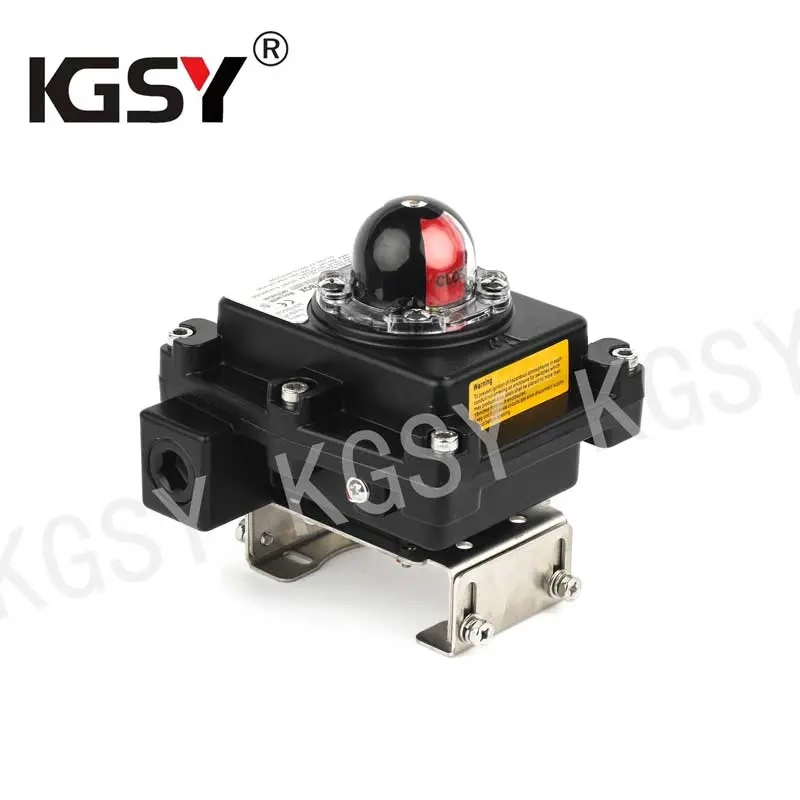
However, raw or poorly treated aluminum is highly vulnerable to chemical decay. To prevent catastrophic environmental ingress and maintain digital certainty in the control room, aluminum switch boxes must be shielded by high-performance surface treatments.
Among these, polyester powder coating (PPC) has emerged as the absolute industry benchmark. This comprehensive technical guide explores the material science, chemical processes, and economic advantages that make polyester powder coating essential for aluminum limit switch boxes.
1. The Vulnerability of Aluminum: Why Raw Metal Fails
A common misconception in piping design is that aluminum is naturally corrosion-proof. While it is true that aluminum quickly forms a microscopically thin passivation layer of aluminum oxide ( ) when exposed to oxygen, this natural barrier is insufficient in aggressive industrial atmospheres.
[ CORROSIVE ATMOSPHERE: Salt Spray / Acid Vapors ]
│
▼ (Breaches Natural Passivation Layer)
[ RAW ALUMINUM ENCLOSURE SURFACE ]
│
┌───────────────────┴───────────────────┐
▼ ▼
[ PITTING CORROSION ] [ GALVANIC REACTION ]
Deep micro-holes breach Dissimilar metals (steel bolts)
enclosure walls, destroying corrode aluminum threads,
IP67 / IP68 protection. seizing the cover permanently.
When raw aluminum is subjected to chemical onslaughts, the passivation layer is easily breached, exposing the metal to severe damage:
-
Chloride Pitting: In marine or coastal environments, sodium chloride (
 ) ions attack the aluminum oxide layer. This triggers localized electrochemical cells that drill microscopic pits deep into the housing walls. Over time, these pits can completely penetrate the enclosure, allowing water to flood the internal electronics.
 -
Galvanic Corrosion: Limit switch boxes are bolted to steel mounting brackets and actuators. In the presence of moisture and airborne salts, raw aluminum acts as an anode to the more noble steel fasteners. This initiates galvanic corrosion, which degrades the aluminum threads and seizes the cover bolts, making maintenance or calibration impossible.
-
Alkaline and Acidic Attack: Aluminum is an amphoteric metal, meaning it dissolves in both highly acidic environments (such as nitric acid,
 , or sulfuric acid,
  ) and strongly alkaline solutions (such as sodium hydroxide,
  ). Without a protective barrier, chemical washes or process vapors will melt raw aluminum housings within weeks.
2. Epoxy vs. Polyester: The Chemistry of Ingress Defense
When selecting a powder coating for outdoor or industrial environments, engineers typically choose between two primary chemistries: epoxy and polyester. While both offer excellent barrier protection, they behave very differently when exposed to environmental stresses.
The Limitations of Epoxy Coatings
Epoxy coatings are exceptionally tough and offer outstanding chemical resistance. However, they have a major Achilles’ heel: poor ultraviolet (UV) stability.
When exposed to solar radiation, the aromatic ether linkages in epoxy resins break down. This causes a phenomenon known as “chalking,” where the smooth, protective coating degrades into a dull, powdery white residue. Once chalking begins, the coating loses its physical integrity, becoming porous and allowing moisture and corrosive chemical ions to seep through to the aluminum substrate.
The Polyester Powder Coating Advantage
Polyester powder coatings utilize carboxyl- or hydroxyl-terminated polyester resins cross-linked with specialized curing agents (such as TGIC or TGIC-free alternatives). This aliphatic chemical structure is highly resistant to UV degradation.
-
Zero Chalking: Under continuous outdoor exposure, polyester coatings retain their color, gloss, and structural density for decades, ensuring the barrier protection remains unbroken.
-
Exceptional Flexibility: Polyester coatings possess superior elastic properties. When the aluminum housing expands and contracts due to extreme thermal cycling (e.g., from
 overnight to
  when mounted on high-temperature steam lines), the polyester coating stretches and flexes without cracking or peeling.
3. The Science of Electrostatic Powder Coating
The superiority of a polyester powder coating is not just found in its chemistry, but also in how it is applied. Unlike traditional liquid wet paints, which are sprayed with solvents and dry via evaporation, powder coatings are applied using electrostatic spray deposition (ESD) and cured under high heat.
[ POWDER APPLICATOR ] ──> [ POSITIVE CHARGE (+) ]
│
▼ (Electrostatic Attraction)
[ ALUMINUM ENCLOSURE ] ──> [ GROUNDED (-) ]
│
▼ (Thermosetting Oven)
[ LIQUEFACTION & CROSS-LINKING AT 180°C to 200°C ]
│
▼ (Cooling Phase)
[ REINFORCED, HOLE-FREE POLYMER BARRIER: 80μm to 120μm ]
-
Electrostatic Attraction: The dry polyester powder is fluidized and blown through an electrostatic spray gun, where the particles receive a positive electrical charge. The die-cast aluminum switch box is securely grounded. This creates an electrostatic field that pulls the charged powder uniformly across every crevice, radius, and internal thread of the aluminum housing.
-
Thermosetting and Cross-Linking: The coated box is placed into a curing oven heated to temperatures between
 and
and  . At this temperature, the powder melts, flows into a continuous liquid film, and undergoes a chemical cross-linking reaction (polymerization).
 -
The Resulting Barrier: Once cooled, the coating forms a highly durable, solid polymer skin with a typical dry film thickness (DFT) of
 to
to  . Because there are no solvents evaporating from the film during curing, the coating is completely free of microscopic pinholes, creating a hermetically sealed barrier against the elements.
4. The Multi-Layer C5-M Coating Process (The KGSY Gold Standard)
At high-tier manufacturing facilities like Zhejiang KGSY Intelligent Technology Co., Ltd., achieving marine-grade (ISO 12944 C5-M) corrosion protection requires a precise, multi-stage application process. Spraying powder onto raw, untreated aluminum will lead to adhesion failure.
To guarantee lifelong durability, KGSY utilizes a rigorous three-step finishing protocol:
Phase 1: Chemical Pre-treatment (Chromation / Zinc-Phosphating)
Before coating, the die-cast aluminum housings undergo an intensive chemical wash to remove surface oxides, mold-release agents, and milling oils. The raw metal is then subjected to a chromating or phosphate-conversion bath. This molecularly alters the aluminum surface, creating a microscopic crystalline layer that acts as an anchor for the subsequent primer, while providing secondary corrosion defense if the outer coat is ever scratched.
Phase 2: Epoxy Primer Base (Interfacial Adhesion)
To combine the mechanical toughness of epoxy with the weatherability of polyester, a high-build epoxy-resin primer is electrostatically applied. This primer provides maximum mechanical adhesion to the pre-treated aluminum substrate and seals the metal from moisture.
Phase 3: Polyester Powder Topcoat (Environmental Defense)
The final layer is the premium polyester powder coat. Baked over the epoxy primer, this layer provides the outer shield against solar UV rays, heavy rain, abrasive dust, and chemical splashes.
This multi-layer system comfortably passes the grueling 1,440-hour continuous salt spray test per ASTM B117 standards, ensuring decades of physical integrity on offshore rigs, chemical tankers, and coastal terminals.
5. Economic ROI: Lowering Total Cost of Ownership (TCO)
For procurement managers and plant engineers, specifying polyester powder-coated aluminum switch boxes is a highly quantifiable financial decision. While untreated or liquid-painted accessories may carry a lower upfront price tag, their lifetime operational cost is staggering.
-
Eliminating Maintenance Labor: When cheap paint blisters and raw aluminum corrodes, the O-ring seals eventually collapse. Technicians must regularly scaffold up to the valve, isolate the line, remove the water-logged switch box, and rewire a replacement. A high-quality PPC finish entirely eliminates this recurring labor cost.
-
Preventing False Plant Trips: When water breaches an unshielded switch box, it causes electrical short-circuits. These short-circuits send false valve status alarms to the DCS, which can trigger emergency system shutdowns. In large-scale petrochemical or power generation facilities, a single unplanned plant trip can cost hundreds of thousands of dollars per hour in lost production.
-
Extending Asset Lifecycles: Upgrading to a premium C5-M compliant polyester-coated aluminum housing extends the service life of your valve accessories from 2 to 3 years to over 15 years, slashing capital expenditure over the life of the plant.
Conclusion: Quality is Credibility
In the demanding world of industrial process control, there is no room for compromise. A limit switch box is the final arbiter of truth for your automated valves, and its survival relies entirely on the engineering integrity of its enclosure.
By utilizing die-cast aluminum alloys treated with multi-stage pre-treatments and cured polyester powder coatings, Zhejiang KGSY Intelligent Technology Co., Ltd. ensures that its APL and ALS-400 series position monitors provide unyielding protection against corrosion, chemical degradation, and UV wear.
When you invest in KGSY’s engineering standards, you are not just buying a limit switch box—you are securing digital certainty, protecting your downstream capital assets, and maximizing your process profitability for the long haul.
Post time: Jun-24-2026

