
In the chemical processing industry, pipelines are the high-stakes highways of production. They transport highly volatile, toxic, and corrosive media—ranging from concentrated sulfuric acid ($H_2SO_4$) and hydrochloric acid ($HCl$) to aggressive organic solvents and caustic bases. Within these complex piping networks, automated valves act as the gatekeepers of flow, safety, and process integrity.
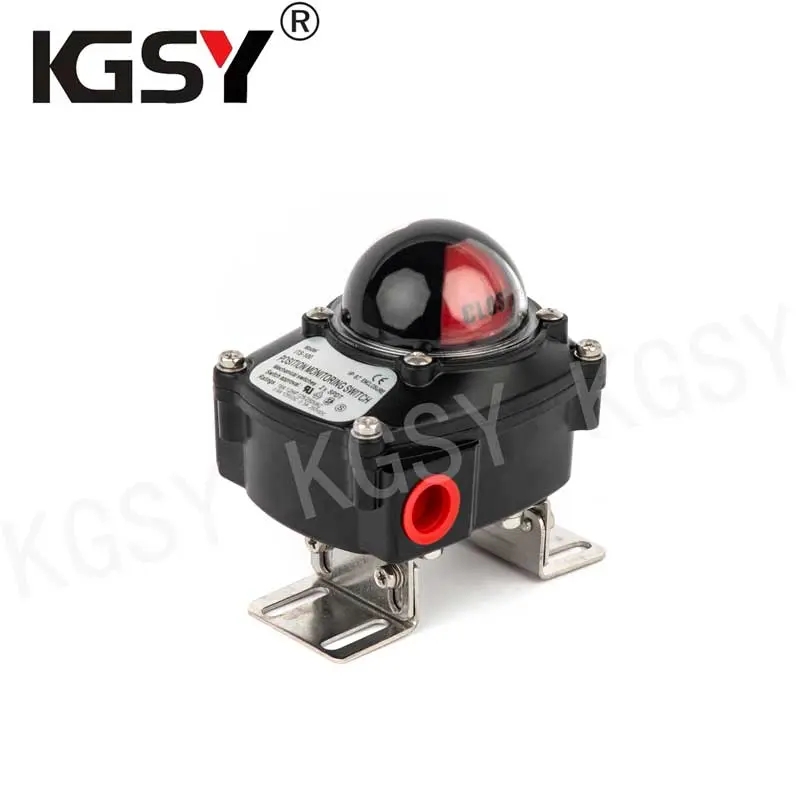
However, an automated valve assembly is only as reliable as its feedback loop. If the control room cannot accurately verify whether a critical isolation valve is fully open or closed, the entire process loop risks catastrophic failure. This feedback relies on valve position monitors, or limit switch boxes.
When installed on chemical processing lines, standard general-purpose limit switch boxes will fail rapidly. The ambient atmosphere alone, often thick with acidic vapors and chemical washdowns, can destroy unprotected hardware in a matter of weeks. To secure long-term operational uptime, engineers must specify acid-resistant switch boxes. This guide explores the engineering principles, material sciences, and design architectures required to defend valve feedback loops against chemical degradation.
1. The Corrosive Threat: How Acids Attack Valve Instrumentation
To appreciate the necessity of specialized acid-resistant hardware, we must understand how corrosive chemicals degrade standard industrial monitors. When standard aluminum or low-grade plastic switch boxes are exposed to acidic environments, they face multiple vectors of degradation:
-
Pitting and Crevice Corrosion: Standard die-cast aluminum enclosures rely on thin oxide layers for basic environmental protection. Acidic splashes breach this layer, causing localized pitting. Once a pit forms, the acid concentrates within the cavity, boring directly through the housing enclosure and exposing the sensitive electronics inside.
-
Polymer Embrittlement: Cheap plastic enclosures or standard rubber seals (like Nitrile/BUNA-N) suffer from chemical degradation when exposed to organic acids or solvents. The acid breaks down the polymer chains, turning pliable seals brittle and causing the plastic housing to crack under normal mechanical stress.
-
Galvanic Corrosion at Fasteners: If a switch box uses carbon steel bolts or mismatched metal fasteners, acidic liquid acts as an aggressive electrolyte. This triggers rapid galvanic corrosion, welding the cover bolts to the housing or causing the mounting bracket to snap.
When an enclosure is breached by acid, the internal mechanical switches, proximity sensors, and terminal strips short-circuit. This blinds the Distributed Control System (DCS), leading to emergency plant shutdowns and dangerous operational blind spots.
2. Material Excellence: The First Line of Defense
The absolute foundation of an acid-resistant switch box is metallurgy and material science. When selecting hardware for chemical processing pipelines, engineers typically choose between two premium enclosure strategies:
A. 316L Stainless Steel Enclosures
For the most extreme chemical environments, 316L stainless steel is the gold standard. The addition of molybdenum (typically 2-3%) in 316L provides exceptional resistance to chloride pitting and aggressive acids compared to standard 304 stainless steel or aluminum.
-
Pros: Virtually immune to atmospheric acid vapor, highly impact-resistant, and ideal for heavy-duty marine or chemical applications.
-
Cons: Higher initial capital expenditure (CapEx) and significantly heavier, requiring sturdier mounting infrastructure.
B. Engineered Fluoropolymer and Epoxy-Coated Aluminum
When weight or budget constraints prevent the use of solid stainless steel, heavy-duty die-cast aluminum boxes coated with specialized protective layers offer an outstanding alternative. Advanced manufacturers apply a multi-layer fluoropolymer (such as PTFE or PVDF) or premium epoxy powder coating over the aluminum housing.
-
Pros: Highly cost-effective, lightweight, and capable of deflecting direct acid splashes and resisting continuous chemical washdowns.
-
Cons: The coating must remain completely scratch-free. If a technician accidentally scores the coating during installation, the underlying aluminum will be exposed to acid attack.
Material Compatibility Matrix for Common Processing Acids
| Enclosure Material | Sulfuric Acid (H2SO4) | Hydrochloric Acid (HCl) | Nitric Acid (HNO3) | Phosphoric Acid (H3PO4) |
| Standard Aluminum | Poor (Rapid Attack) | Poor (Rapid Attack) | Poor | Fair |
| Epoxy-Coated Aluminum | Good (Assuming Intact Coating) | Good | Fair | Excellent |
| 304 Stainless Steel | Fair | Poor | Good | Good |
| 316L Stainless Steel | Excellent | Fair (Concentration Dependent) | Excellent | Excellent |
3. Advanced Sealing Architectures and Internal Protection
An acid-resistant enclosure is meaningless if corrosive vapors can seep through the joints, shaft entries, or conduit lines. True chemical-grade switch boxes utilize multi-layered sealing engineering to create a hermetic barrier:
Fluorocarbon (Viton) O-Rings
Standard limit switch boxes rely on NBR O-rings for weatherproofing. Acid-resistant boxes upgrade these seals to Viton (FMC/FKM) or Kalrez (FFKM) elastomer compounds. Viton retains its elasticity and chemical structure when subjected to harsh acids and extreme thermal cycling, ensuring that the interface between the housing body and the cover remains completely water- and vapor-tight.
Dual-Shaft Sealing Systems
The primary moving part of a switch box is its rotating shaft, which couples directly to the valve actuator. This shaft represents a primary ingress path for chemicals. Acid-resistant monitors feature dual-shaft seals—using both an upper and lower Viton lip seal—to prevent acid from wicking up the shaft and entering the internal switch cavity.
Hermetically Sealed Proximity Sensors
Inside the box, mechanical micro-switches with open copper contacts are highly vulnerable to corrosion if even a trace amount of vapor bypasses the seals. To eliminate this vulnerability, chemical processing lines often specify hermetically sealed inductive proximity sensors (such as NAMUR sensors). Because these sensors are completely encased in solid resin or stainless steel sleeves, they have no moving parts or exposed electrical contacts, rendering them completely immune to internal atmospheric decay.
4. The Intersection of Acid Resistance and Explosion Protection (Ex d)
In chemical processing, acids are rarely handled in isolation. They are frequently used alongside highly flammable hydrocarbons, volatile organic compounds (VOCs), and combustible gases. Consequently, a chemical pipeline switch box must often be both acid-resistant and explosion-proof (Ex d / Flameproof).
Heavy-duty models like the ALS-500 series provide this dual protection. The enclosure features thick, heavy-walled construction capable of containing an internal explosion while featuring precision-machined, flameproof thread entries and cover joints. When ordering these units for chemical lines, specifying a marine-grade corrosion coating over the flameproof housing provides the perfect defense mechanism: the heavy wall contains internal hazards, while the outer chemical-resistant coating neutralizes external atmospheric acid.
5. Critical Installation and Maintenance Protocols
To maximize the lifecycle of acid-resistant valve monitoring hardware, maintenance teams must follow rigorous field protocols during installation and turnaround cycles:
-
Use Ex-Rated, Acid-Resistant Cable Glands: A switch box is only as sealed as its conduit entry. Standard nylon or brass glands will dissolve or corrode. Always specify 316 stainless steel or nickel-plated brass Ex-rated cable glands with Viton seals.
-
Apply Anti-Seize Compound to Fasteners: Always apply a chemical-resistant, non-metallic anti-seize compound to the stainless steel cover bolts. This prevents thread galling and ensures the box can be easily opened for maintenance years later.
-
Inspect Visual Indicators: Ensure the high-visibility local position indicator dome is molded from an acid-tolerant polymer, such as polycarbonate or impact-resistant modified acrylic, which resists yellowing and crazing when exposed to chemical fumes.
Conclusion
When configuring chemical processing pipelines, cutting corners on valve monitoring hardware is a recipe for operational failure, regulatory fines, and personnel risk. Upgrading from standard weatherproof monitors to acid-resistant switch boxes built with 316L stainless steel or fluoropolymer-coated alloys ensures that your automation infrastructure can handle the toughest chemical environments on earth.
By choosing robust sealing architectures, chemical-tolerant elastomers, and certified flameproof enclosures, processing plants protect their capital assets, secure their digital DCS loops, and ensure that their production lines run safely and efficiently for years to come.
Post time: May-27-2026

