
In the complex ecosystem of industrial process control, the automated valve is the physical muscle that dictates the flow of media. However, an automated valve is effectively blind without a reliable feedback mechanism to communicate its position back to the Distributed Control System (DCS). This vital communication relies entirely on the limit switch box (also known as a valve position monitor).
When engineers and procurement teams specify hardware for a new piping project or a facility upgrade, they frequently face a critical architectural decision: Should they specify a compact switch box or a standard-size (heavy-duty) switch box?
While it might be tempting to view this merely as a decision about physical dimensions, the choice between compact and standard profiles fundamentally impacts the mechanical reliability, electrical versatility, and overall safety of your process line. This comprehensive SEO guide breaks down the technical differences, advantages, and ideal use cases for both form factors.
1. Defining the Form Factors
Before comparing the two, it is essential to understand the engineering philosophy behind each design.
What is a Compact Switch Box?
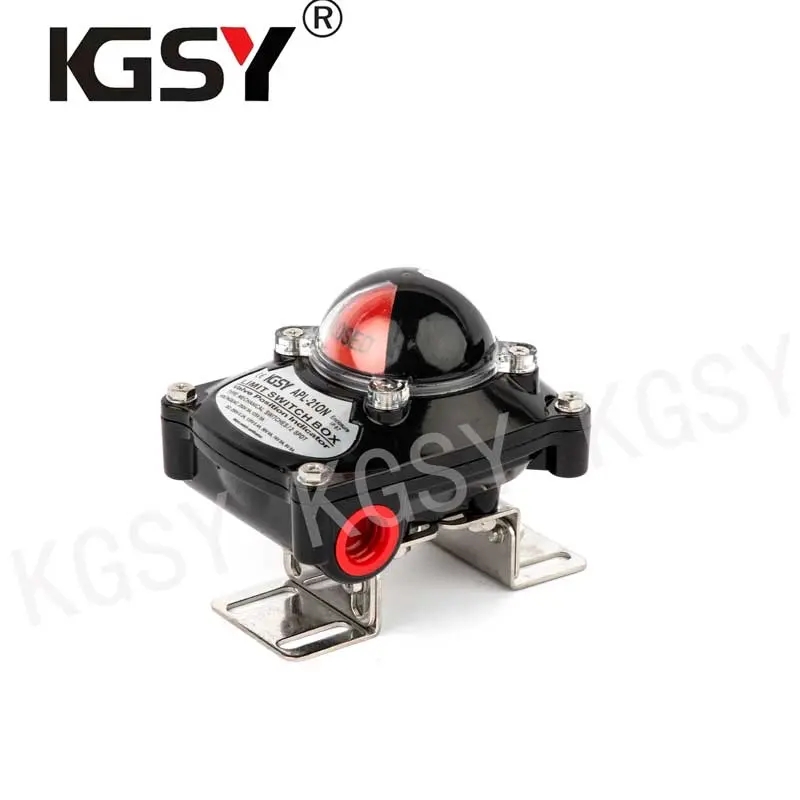
A compact switch box (such as the widely recognized APL-200 or APL-210 series) is engineered for maximum space efficiency. These units are designed with a low-profile geometry, often utilizing lightweight die-cast aluminum or high-impact engineered plastics (like polycarbonate). Their primary goal is to provide reliable, discrete digital feedback (Open/Closed) in the smallest possible physical footprint, without adding unnecessary weight or bulk to the actuator.
What is a Standard/Heavy-Duty Switch Box?
A standard-size switch box (such as the ALS-400 or ALS-500 series) is built for maximum resilience and electrical capacity. These enclosures are significantly larger, heavier, and typically cast from thick-walled aluminum or 316 stainless steel. Their primary design goal is survival in severe environments and providing ample internal volume for complex wiring, advanced sensor arrays, and hazardous area containment.
2. Head-to-Head Technical Comparison
To make an informed specification, plant engineers must evaluate these monitors across several critical technical parameters.
A. Space Constraints and Piping Density
Compact Boxes: In modern manufacturing, particularly in OEM skids, pharmaceutical cleanrooms, and food and beverage processing, physical space is a premium commodity. Piping manifolds are packed tightly to eliminate dead legs and reduce the overall footprint of the machinery. Compact switch boxes shine here. Their low profile prevents the “Christmas Tree” effect—where tall instrument stacks interfere with adjacent pipes, walkways, or maintenance access.
Standard Boxes: Standard boxes require significantly more vertical and lateral clearance. In sprawling petrochemical plants or heavy mining operations, space is rarely the primary constraint. In these environments, the massive footprint of a standard box is easily accommodated by the larger pipeline infrastructure.
B. Internal Real Estate and Electrical Integration
Standard Boxes: The larger internal cavity of a standard switch box is one of its greatest assets. When field technicians must wire multi-pole terminal blocks (often 8 to 12 points) while wearing thick, flame-retardant safety gloves, internal space is critical. Standard boxes can easily house:
-
Standard SPDT or DPDT mechanical switches.
-
NAMUR inductive proximity sensors.
-
Continuous 4-20mA position transmitters.
-
Complex daisy-chained wiring schemes.
-
Dual, heavy-duty conduit entries (up to 3/4″ NPT or M20).
Compact Boxes: Compact monitors are typically limited to essential feedback. While they easily accommodate dual micro-switches or basic proximity sensors, there is rarely enough room to add analog position transmitters. The terminal strips are smaller, and the conduit entries are generally limited to 1/2″ NPT, requiring thinner cables and more precise wire management by the installation crew.
C. Environmental Durability and Hazardous Certifications
Compact Boxes: Most compact switch boxes are designed for general-purpose environments. They offer excellent weatherproof protection, typically rated at IP67 (NEMA 4, 4X), making them fully capable of withstanding rain, dust, and standard facility washdowns. However, they are generally not rated to contain explosions.
Standard Boxes: When a process involves volatile hydrocarbons, combustible dust, or extreme chemical exposure, standard-size boxes are non-negotiable. The thick walls of heavy-duty models like the ALS-500 are designed to achieve Ex d (Flameproof) certification for Zone 1 and Zone 2 hazardous areas. If an internal spark ignites a gas that has seeped into the enclosure, the massive casing absorbs the explosive pressure, and precision-machined flame paths cool the escaping gases, preventing a catastrophic facility explosion.
D. Mechanical Vibration and Linkage Stability
Standard Boxes: Large pipeline pumps and compressors generate severe, low-frequency vibration. A heavy-duty switch box uses a thicker, rigid stainless steel NAMUR bracket and a heavy-duty primary shaft. This mass dampens vibration, preventing the internal cams from slipping and ensuring the feedback signal remains rock-solid over millions of cycles.
Compact Boxes: Because they are lightweight, compact boxes are highly efficient on smaller pneumatic actuators. However, if mounted on a massive 24-inch pipeline actuator experiencing heavy vibration, the lighter bracket and smaller shaft can experience resonance, potentially leading to mechanical fatigue or signal drift over time.
3. Total Cost of Ownership (TCO) and ROI
Procurement decisions are ultimately driven by the Total Cost of Ownership.
-
The Compact ROI: Compact switch boxes offer a highly attractive initial Capital Expenditure (CapEx). They are less expensive to manufacture, cheaper to ship, and perfectly adequate for 70% of standard industrial applications. Using a heavy-duty box in a municipal water plant would be a waste of resources; the compact box delivers the best ROI.
-
The Standard ROI: Standard, heavy-duty boxes carry a higher upfront cost. However, in severe service applications (offshore oil rigs, chemical refineries), their ROI is measured in risk mitigation. A standard box prevents moisture ingress, survives physical impacts, and resists vibration. The cost of one unplanned plant shutdown caused by a shattered, lightweight plastic switch box far exceeds the initial premium paid for a heavy-duty aluminum enclosure.
4. Making the Final Decision: Which Should You Specify?
Choosing the correct valve position monitor requires aligning the hardware with the reality of the process environment.
Specify a Compact Switch Box when:
-
You are building high-density OEM equipment or modular skids.
-
The application is in a “Safe Zone” (non-hazardous area).
-
The environment requires standard weatherproofing (IP67) without extreme mechanical impact risks.
-
You only require simple Open/Closed discrete feedback.
-
Project budget dictates cost-efficient automation scaling.
Specify a Standard / Heavy-Duty Switch Box when:
-
The facility contains classified Hazardous Areas requiring ATEX / IECEx Explosion-Proof (Ex d) certification.
-
The valve is subjected to high continuous pipeline vibration or extreme thermal cycling.
-
You require a continuous 4-20mA position transmitter alongside discrete switches.
-
The environment features highly corrosive atmospheres (requiring thick marine-grade coatings or 316L stainless steel).
Conclusion
Both compact and standard-size limit switch boxes play indispensable roles in modern industrial automation. There is no universally “better” option—only the right option for your specific piping conditions. By evaluating your space constraints, wiring complexity, and environmental hazards, engineering teams can specify the exact KGSY limit switch box needed to ensure their automated valves remain communicative, reliable, and fundamentally safe.
For expert guidance on selecting the perfect limit switch box for your next valve automation project, consult with the engineering team at Zhejiang KGSY Intelligent Technology Co., Ltd. to explore our full range of compact APL series and heavy-duty ALS series monitors.
Post time: May-27-2026

