
Wastewater treatment plants (WWTPs) are the unsung heroes of modern municipal and industrial infrastructure. Every day, these facilities process millions of gallons of raw sewage, chemical runoff, and industrial effluent, transforming hazardous waste into safe, dischargeable water. At the heart of this massive, complex operation is the piping network, and controlling the flow through that network is thousands of industrial valves.
However, an automated valve is only as intelligent as the feedback it provides. If the Distributed Control System (DCS) or Supervisory Control and Data Acquisition (SCADA) system does not know the exact physical position of a valve, the entire automated process is compromised. This is where valve position monitoring—typically achieved via limit switch boxes—becomes the critical failsafe for plant operations.
In this comprehensive SEO guide, we will explore the unique challenges of the wastewater environment, the cost of “blind” valves, and the specific monitoring technologies required to keep WWTPs operating safely and efficiently.
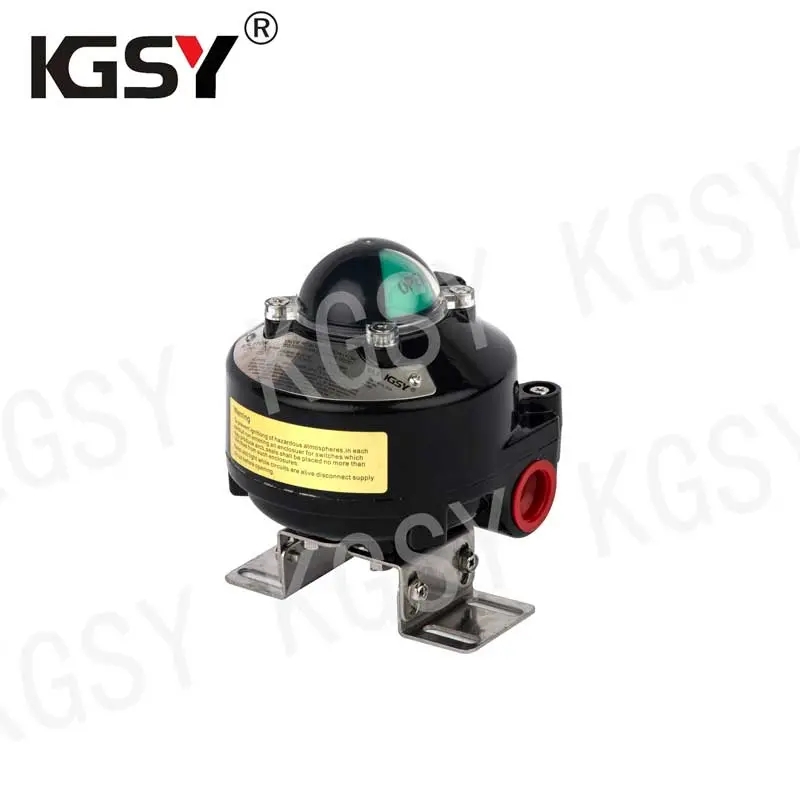
1. The Harsh Reality of the Wastewater Environment
Unlike clean indoor manufacturing facilities, wastewater treatment plants present one of the most hostile environments for electronic and mechanical instrumentation. Limit switch boxes installed in these facilities must survive a gauntlet of destructive forces.
-
Corrosive Gases: The biological breakdown of organic matter releases Hydrogen Sulfide ($H_2S$) and ammonia. $H_2S$ is highly corrosive to standard copper wiring and unprotected circuit boards, leading to rapid electronic failure.
-
Extreme Moisture and Submersion: Many valves in WWTPs are installed outdoors, in deep subterranean lift stations, or directly over clarifier tanks. They are subjected to torrential rain, high humidity, and occasional flooding.
-
Temperature Extremes: From freezing winter conditions to blistering summer heat, the outdoor nature of wastewater processing means external monitoring hardware experiences severe thermal cycling.
Standard, general-purpose limit switches will fail rapidly under these conditions. Specifying the correct, environment-specific hardware is a matter of environmental compliance and plant safety.
2. The Operational Cost of “Blind” Valves
When a limit switch box fails—or if a manual valve is left without a monitor—the valve becomes “blind” to the SCADA system. In a WWTP, the consequences of a blind valve are severe:
-
Pump Cavitation and Dead-Heading: If a large centrifugal pump engages while a downstream isolation valve is falsely reported as “Open,” the pump will dead-head. This can destroy the pump seals, shatter the impeller, and result in tens of thousands of dollars in mechanical damage.
-
Biological Process Disruption: Secondary treatment relies on a delicate balance of dissolved oxygen. If an automated butterfly valve regulating blower air to an aeration basin fails to throttle correctly, the aerobic bacteria can die off, crashing the entire treatment process.
-
Environmental Spills and Fines: The ultimate failure in a WWTP is an overflow event. If valves directing flow to emergency holding tanks fail to report their true position, untreated effluent can bypass the plant and enter local waterways, resulting in massive EPA fines and ecological damage.
3. Selecting the Right Hardware for WWTPs
To combat the harsh environment and prevent operational failures, engineers must specify limit switch boxes and position transmitters with exacting standards.
A. Ingress Protection (IP67 and IP68)
For general outdoor use in a WWTP, an enclosure must carry an IP67 rating, ensuring it is completely dust-tight and capable of surviving temporary submersion (such as heavy rain or washdowns). However, for valves located in deep vaults or lift stations prone to flooding, specifying an IP68 submersible limit switch box is mandatory to prevent water from shorting out the terminal blocks.
B. Material Selection and Coatings
To combat hydrogen sulfide and atmospheric corrosion, standard carbon steel brackets and untreated aluminum boxes are insufficient.
-
Engineered Plastics: High-impact resins and polycarbonates offer excellent chemical resistance for low-stress applications.
-
Coated Aluminum: Die-cast aluminum boxes (like the APL-210 series) must feature a heavy polyester powder coating to seal the metal from corrosive gases.
-
Stainless Steel: For the most severe chemical exposure areas, 316L stainless steel enclosures and custom mounting brackets are the gold standard, ensuring decades of rust-free operation.
4. Key Monitoring Applications Across the Treatment Stages
Wastewater treatment is a multi-stage process. Different stages require different valve monitoring strategies.
Stage 1: Headworks and Primary Treatment
At the plant inlet, large knife gate valves handle raw sewage filled with rags, grit, and heavy debris. These valves require rugged, heavy-duty switch boxes capable of withstanding the vibration of large pneumatic or electric actuators. Simple, robust mechanical micro-switches are highly effective here for reliable Open/Closed discrete feedback.
Stage 2: Aeration Basins (Secondary Treatment)
In the aeration basins, blowers pump oxygen into the water to sustain the microorganisms that consume the waste. The flow of this air is strictly regulated by modulating butterfly valves.
Here, simple Open/Closed feedback is not enough. Facilities utilize advanced sensors like the ITS-100 integrated linear/rotary monitor, equipped with a continuous 4-20mA position transmitter. This allows the DCS to track the valve exactly (e.g., 43% open) to maintain the perfect dissolved oxygen levels, optimizing power consumption for the massive blower motors.
Stage 3: Anaerobic Digestion and Sludge Handling
When sludge is pumped into anaerobic digesters, the bacteria produce biogas (primarily methane). Because methane is highly explosive, the areas around the digesters and the biogas flare systems are classified as Hazardous Zones.
General-purpose switch boxes are illegal in these zones. Facilities must retrofit these valves with Explosion-Proof (Ex d) limit switch boxes, such as the ALS-500 series. These heavy-duty enclosures are engineered to contain an internal ignition, preventing a spark from detonating the methane-rich atmosphere of the digester plant.
5. The Importance of Retrofitting Manual Valves
While new WWTPs are heavily automated, thousands of legacy plants rely on manual handwheel valves for bypass lines, clarifier drains, and pump isolation. As mentioned earlier, manual valves are blind to the SCADA system.
A major trend in wastewater modernization is retrofitting these manual valves with electronic position monitors. Because manual valves lack standard NAMUR mounting pads, this requires precision-engineered custom stainless steel mounting brackets. By bridging a reliable switch box to a manual rising-stem gate valve or rotary plug valve, plant managers can create critical safety interlocks, ensuring that a pump will absolutely not start until the operator has manually opened the suction valve.
6. The ROI of Advanced Valve Monitoring
Municipalities and private industrial plants operate on strict budgets. Upgrading limit switch boxes and retrofitting manual valves requires capital expenditure. However, the Return on Investment (ROI) is undeniable:
-
Reduced Maintenance Costs: By utilizing splined, vibration-proof cams and IP67 sealed enclosures, technicians spend less time recalibrating drifting signals or replacing water-logged circuit boards.
-
Energy Efficiency: Precise 4-20mA feedback in aeration basins prevents the over-supply of oxygen, directly reducing the massive electricity costs associated with blower operation.
-
Risk Mitigation: The cost of one EPA fine for an overflow event, or the cost of replacing one cavitated sludge pump, dwarfs the cost of outfitting the entire facility with premium KGSY valve position monitors.
Conclusion
Valve position monitoring in a Wastewater Treatment Plant is not an optional accessory; it is the central nervous system of the facility’s safety and operational logic. By understanding the corrosive, wet, and sometimes explosive nature of the environment, engineers can move beyond general-purpose hardware.
Whether it is deploying continuous position transmitters for aeration control, installing Ex d flameproof boxes on methane lines, or fabricating custom brackets for legacy manual valves, investing in robust monitoring architecture ensures that the vital process of water reclamation flows safely, predictably, and efficiently.
Post time: May-27-2026

