
In the demanding world of process automation, pipelines are routed through some of the most unforgiving environments on the planet. From offshore drilling platforms pelted by salt spray to chemical processing plants saturated with highly reactive vapors, the external hardware protecting your automation architecture takes a daily beating.
While heavy cast-iron valve bodies and robust pneumatic actuators are designed to withstand this abuse, the more delicate electrical feedback components often become the weakest link. When a limit switch box (valve position monitor) begins to corrode, it is not merely a cosmetic issue—it is a ticking time bomb for your Distributed Control System (DCS). Once the structural integrity of the enclosure is breached, moisture, chemical vapors, and airborne particulates invade the internal printed circuit boards (PCBs) and mechanical micro-switches, leading to inevitable signal failure, false interlocks, and catastrophic process downtime.
If you are walking the plant floor and notice the telltale signs of flaking paint and oxidizing metal on your valve position monitors, immediate action is required. Here is a comprehensive engineering guide on how to triage corroded limit switch boxes, identify the root causes, and permanently upgrade your hardware defenses.
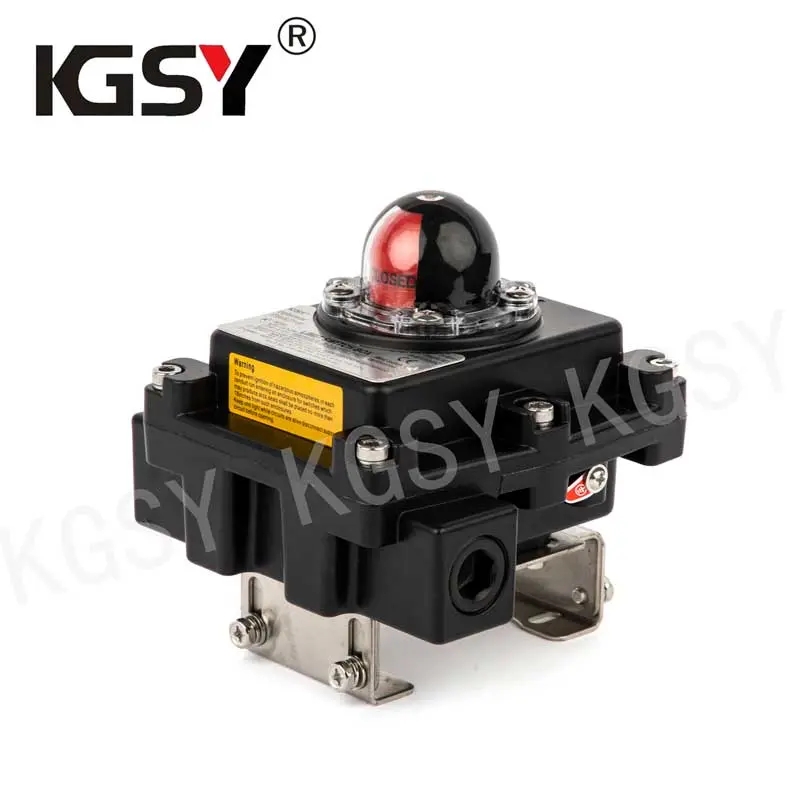
1. The Symptoms: Recognizing the Stages of Corrosion
Corrosion on a limit switch box usually progresses in distinct stages. Recognizing these early can save the internal electronics before they are destroyed.
-
Stage 1: Surface Degradation (Cosmetic): The outer protective coating (often standard wet paint on cheaper units) begins to blister, bubble, or flake off. The underlying aluminum or zinc alloy is exposed to the atmosphere. At this stage, the IP67 or NEMA 4X weather seal is likely still intact, and the DCS signal remains stable.
-
Stage 2: Galvanic and Pitting Corrosion: White powdery deposits (aluminum oxide) or red rust (if carbon steel brackets/bolts are used) begin to form. Pitting corrosion starts eating into the metal housing. The threaded holes securing the captive cover bolts or the cable glands begin to degrade, weakening the mechanical clamping force of the O-ring seals.
-
Stage 3: Enclosure Breach and Internal Attack: The corrosion eats through the casing, or the gasket surfaces become so uneven that the O-ring fails. Corrosive gases or water ingress into the internal chamber. The copper traces on the PCB oxidize, turning green or black. The silver contacts inside mechanical SPDT/DPDT micro-switches tarnish, causing electrical resistance to spike.
-
Stage 4: Complete Signal Failure: The DCS begins receiving erratic 4-20mA signals, or digital feedback simply drops out. The valve is moving, but the control room is completely blind.
2. Immediate Triage: What to Do When You Spot Corrosion
When a severely corroded limit switch box is identified in the field, maintenance teams must approach it systematically to safely assess the damage and restore functionality.
Step 1: Secure the Loop and LOTO Never attempt to open a corroded electrical enclosure without first coordinating with the control room to bypass the interlock. Observe complete Lockout/Tagout (LOTO) procedures to isolate both the pneumatic air supply and the electrical power. If the unit is in a classified hazardous area (Ex d), ensure proper hot-work permits and gas sniffing protocols are followed.
Step 2: External Cleaning and Fastener Extraction Do not force the cover bolts. Corroded aluminum threads will easily gall and strip. Use a wire brush to remove loose oxidation around the bolt heads and apply a high-quality penetrating oil. Allow it to soak. Carefully extract the cover bolts and the VDI/VDE 3845 NAMUR bracket bolts.
Step 3: Internal Assessment Carefully remove the cover. If you find standing water, severe PCB discoloration, or brittle, oxidized wire insulation, the unit is beyond reliable repair. It must be completely replaced. Do not attempt to clean and reuse a heavily corroded PCB in a critical control loop; the microscopic copper traces are likely compromised and will fail under thermal stress.
Step 4: The Interim Fix If the internal components are pristine and the corrosion is strictly external (Stage 1 or early Stage 2), you can temporarily salvage the unit. Clean the mating surfaces of the enclosure, install a fresh NBR or silicone O-ring, and apply a dielectric grease to the gasket track to repel moisture. Reassemble the unit using new stainless steel bolts and schedule a permanent replacement during the next turnaround.
3. Root Cause Analysis: Why Did It Corrode?
Replacing a failed switch box with an identical, cheap unit guarantees the failure will repeat. You must understand why the hardware degraded.
-
Dissimilar Metals (Galvanic Corrosion): This is incredibly common. If an aluminum limit switch box is mounted to a carbon steel actuator using plain steel bolts in a humid environment, the aluminum acts as an anode and rapidly sacrifices itself, dissolving into white powder.
-
Inferior Surface Treatment: Low-cost manufacturers often use standard wet-spray paint over untreated cast aluminum. Once a wrench scratches the paint during installation, moisture creeps under the coating, causing it to peel off in large sheets.
-
Chemical Attack: Standard aluminum alloys are highly susceptible to airborne chlorides (found in coastal environments) and hydrogen sulfide (H2S, common in oil & gas and wastewater).
-
Trapped Condensation: Sometimes the corrosion starts from the inside. If the enclosure suffers from extreme thermal cycling, humid air is drawn in through micro-leaks. The water condenses on the cold metal walls overnight, creating an internal corrosive micro-climate.
4. Upgrading Your Defense: The Engineered Approach
The only permanent solution to limit switch box corrosion is specifying hardware engineered for the exact severity of your process environment. Upgrading your specifications eliminates these repetitive maintenance cycles.
At Zhejiang KGSY Intelligent Technology Co., Ltd., we engineer our valve position monitors to survive where standard commercial units disintegrate.
Advanced Aluminum Protection (APL and Standard KG800 Series): We do not rely on standard wet paint. Our die-cast aluminum enclosures undergo a rigorous chromate conversion coating process before being finished with a heavy-duty, baked electrostatic polyester powder coat. This creates a dense, non-porous barrier that aggressively resists salt spray, UV degradation, and chemical vapors.
Full Stainless Steel Architecture (Offshore and Highly Corrosive Applications): For environments where even coated aluminum will eventually fail—such as marine platforms, acid processing, or heavy caustic washdowns—the only acceptable defense is metallurgical immunity. We offer our premium enclosures, NAMUR mounting brackets, and all captive fasteners machined entirely from 316L Stainless Steel. This ensures that the mechanical integrity and the IP67 weather seal remain perfect for the lifecycle of the valve.
Defeating Internal Corrosion: To combat internal condensation, our enclosures can be fitted with specialized Ex d breather drains. These engineered micro-valves allow trapped moisture to continuously vent while blocking external water ingress, keeping the internal PCBs and terminal blocks bone dry.
Conclusion
Corrosion is relentless, but it is not inevitable. By training your maintenance personnel to spot the early warning signs of hardware degradation, and by moving away from economy-grade materials in favor of highly engineered, chemically resistant enclosures, you can protect your critical DCS feedback loops. A well-specified limit switch box should outlast the valve it sits on.
We invite you to examine our corrosion-resistant architectures, including our heavy-duty explosion-proof series, in person this May at CHEMUK 2026 at the NEC in Birmingham. Come see how proper metallurgy and superior surface treatments can permanently eliminate signal failure in your harshest applications.
Post time: May-27-2026

